

[ONLINE] Unravelling the Implementing Article 32 Sanctions Compliance Requirements issued by the Sanctions Monitoring Board – 21 January
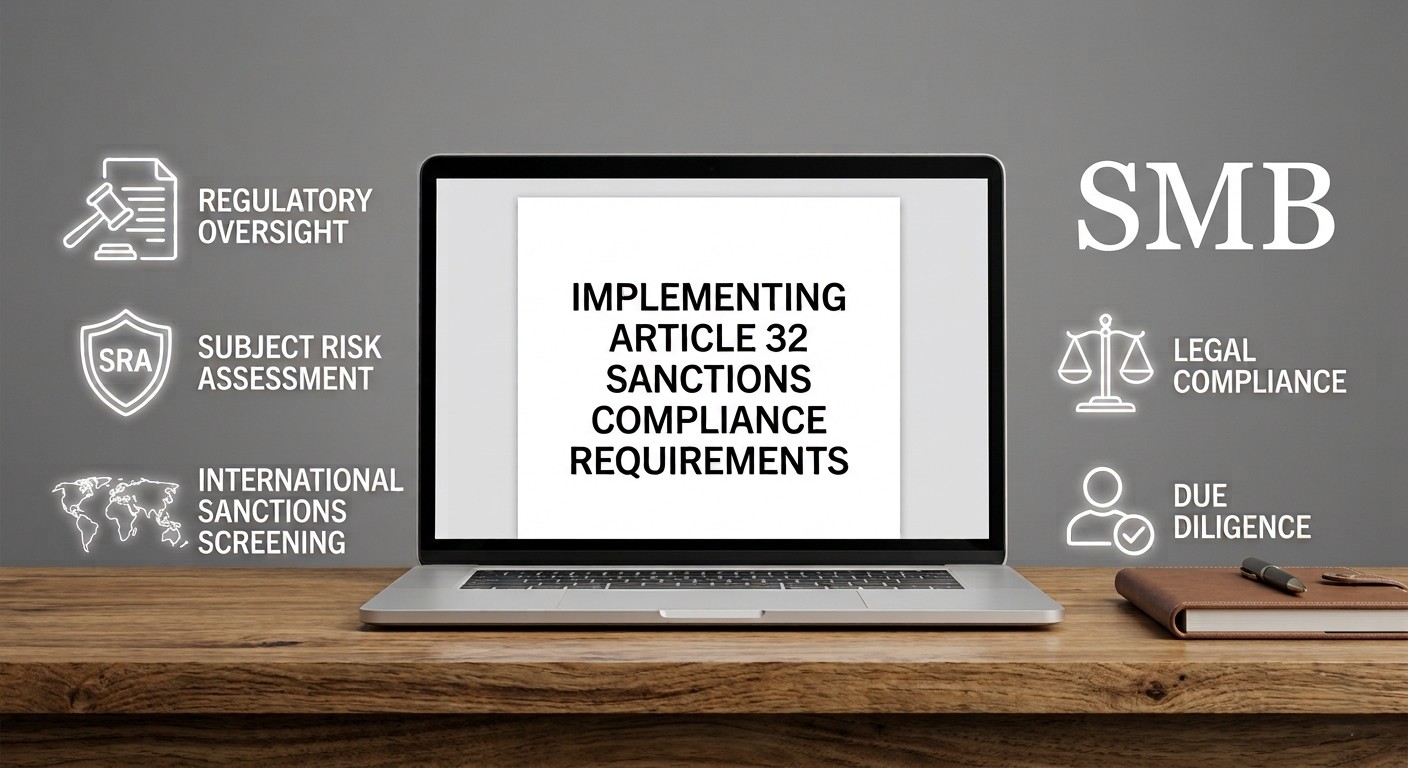
This webinar will provide participants with a structured and practical overview of the new Requirements, focusing on how affected organisations should translate the SMB’s regulatory expectations into effective governance arrangements, risk assessments, customer due diligence measures, screening systems, transaction-monitoring controls and reporting procedures.
The session will explain the principal components of an effective sanctions’ compliance framework and identify the practical steps that organisations should consider when assessing their present level of readiness. It will also explore the relationship between sanctions compliance and established AML/CFT processes, while highlighting areas in which sanctions obligations require a separate or broader analysis.
Seminar Description
On 20 August 2026, the Sanctions Monitoring Board, or SMB, published the Implementing Article 32 Sanctions Compliance Requirements. The Requirements provide practical guidance and procedures concerning the sanctions compliance obligations arising under Article 32 of the
National Interest (Enabling Powers) Act, Chapter 653 of the Laws of Malta. They establish a framework intended to strengthen Malta’s sanctions compliance regime and are binding and legally enforceable.
This webinar will provide participants with a structured and practical overview of the new Requirements, focusing on how affected organisations should translate the SMB’s regulatory expectations into effective governance arrangements, risk assessments, customer due diligence measures, screening systems, transaction-monitoring controls and reporting procedures.
The session will explain the principal components of an effective sanctions’ compliance framework and identify the practical steps that organisations should consider when assessing their present level of readiness. It will also explore the relationship between sanctions compliance and established AML/CFT processes, while highlighting areas in which sanctions obligations require a separate or broader analysis.
A central theme will be the requirement to carry out and maintain a documented enterprise-wide Sanctions Risk Assessment, or SRA. Participants will be guided through the risk areas identified in the Requirements, including customers, products, services, jurisdictions, delivery channels and transactions. The webinar will also consider proportionality, the formulation of a documented sanctions risk appetite, and the need to review sanctions exposure as business activities, customer profiles and sanctions regimes evolve.
The webinar will also examine sanctions-specific customer due diligence and the ongoing screening and transaction-monitoring expectations contained in the Requirements. These include screening following sanctions-list updates, maintaining accurate customer information, and deploying transaction-monitoring controls capable of identifying sanctions-related red flags.
Areas attracting greater scrutiny include sanctioned or high-risk jurisdictions, complex payment arrangements, shell entities, restricted goods and structures that may conceal the identity of ultimate beneficiaries.
Moreover, the session will examine the operational response required when a designated person or sanctioned entity is identified, and the reporting procedure.
Finally, the webinar will consider governance and internal-control expectations, including clear allocation of responsibility, senior-management oversight, escalation channels, the possible appointment of a Sanctions Compliance Officer or equivalent function, documented policies and procedures, screening and monitoring systems, staff training, and a minimum five-year record-retention period.
Target Audience
The Requirements currently apply to entities and persons falling within Schedule I of the Act. This presently includes subject persons carrying out relevant financial business or relevant activity under the Prevention of Money Laundering and Funding of Terrorism Regulations, S.L.373.01. However, the categories covered may be extended through future amendments to Schedule I. Therefore, this webinar is not only of interest to all subject persons, but also to all the practitioners and professionals who advise them in their compliance framework.
CPE
Qualifies for 2 CPE Core hours
Course Fee
The course fee is €60.00 Non-Members €55.00 For Members. The fee covers seminar participation and access to event resources. Login details will be provided closer to the date.
A receipt will be issued to all participants.
Event Resources
Participants will receive the event resources by email.
Additional Information
For more information, kindly use the following communication mediums:
T: 21 58 53 74 M: 77 01 17 19 E: info@skillsmalta.com Webpage: www.skillsmalta.com
Related Courses

[ONLINE] The Obligations of Administrators of Foundations & Associations in Malta – 19 November
This webinar provides a comprehensive overview of the legal, regulatory, and fiduciary obligations...

[ONLINE] ESG Fundamentals – Building a Sustainable Future – 20 October
This two-hour session will provide an understanding of the foundational principles of ESG –...