

[ONLINE] Building High-Performance Teams: The Manager’s Toolkit for Motivation, Communication and Performance – 02 March
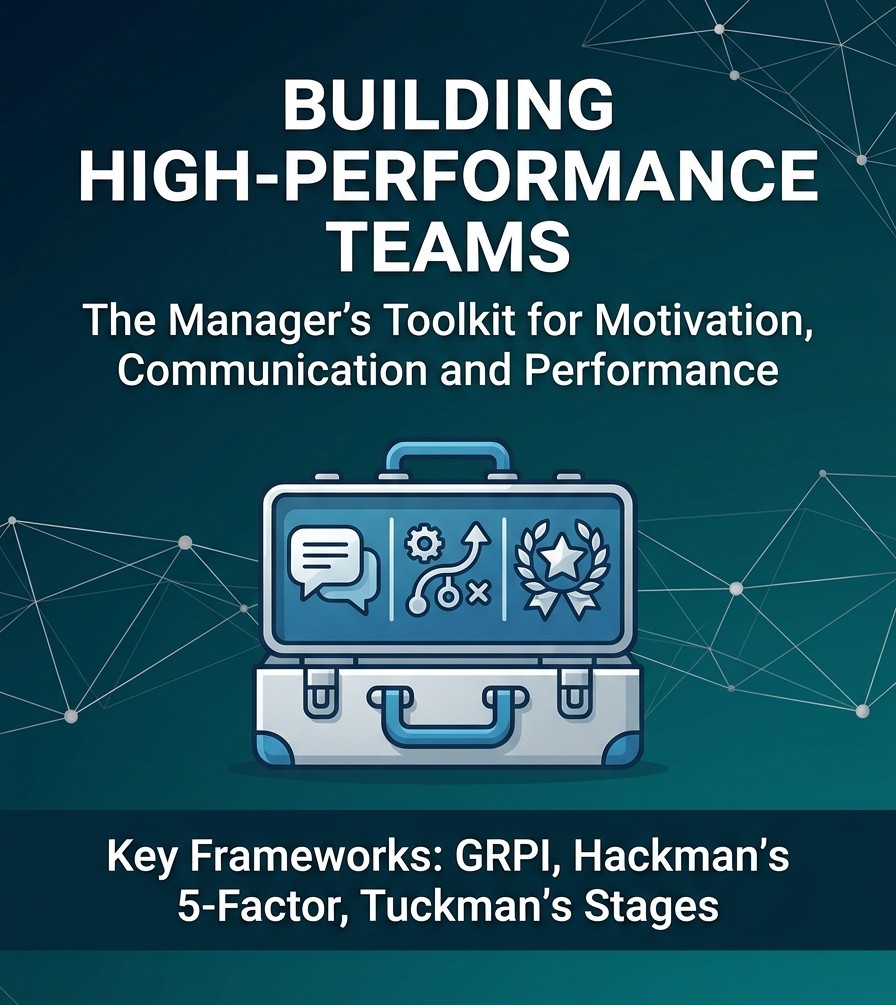
The session begins by examining what distinguishes a high-performing team from an ordinary work group. Participants will be introduced to practical team-effectiveness frameworks, including the GRPI model of Goals, Roles, Processes and Interpersonal Relationships, Hackman’s Five-Factor Model and Tuckman’s stages of team development. These frameworks will help managers diagnose where their teams currently stand and identify barriers that may be preventing them from progressing towards consistently high performance.
Seminar Description
High-performing teams do not emerge simply by bringing talented individuals together. They are developed deliberately through clear purpose, effective leadership, trust, motivation, communication, accountability and continuous attention to performance. Shirley Davis identifies shared purpose, mutual accountability, complementary skills, effective communication, clearly defined roles, trust and psychological safety, constructive conflict, adaptability, and appreciation among the important characteristics of high-performing teams. This two-hour interactive presentation provides managers and team leaders with a practical toolkit for creating these conditions and translating individual capability into sustained collective performance.
The session begins by examining what distinguishes a high-performing team from an ordinary work group. Participants will be introduced to practical team-effectiveness frameworks, including the GRPI model of Goals, Roles, Processes and Interpersonal Relationships, Hackman’s Five-Factor Model and Tuckman’s stages of team development. These frameworks will help managers diagnose where their teams currently stand and identify barriers that may be preventing them from progressing towards consistently high performance.
The presentation then explores motivation and engagement. Rather than assuming that the same incentives motivate everyone, managers will consider how purpose, meaningful goals, recognition, autonomy, development opportunities and a sense of belonging can encourage employees to contribute their best. Particular emphasis will be placed on the manager’s role in creating an environment in which people feel valued, supported and motivated. Emotional intelligence, empathy and genuine recognition will be presented as practical leadership capabilities rather than abstract concepts. Davis emphasises that empathy, active listening and regular recognition help leaders strengthen trust, relationships and employees’ willingness to excel.
The third component addresses communication, trust and psychological safety. Participants will explore practical techniques for active listening, establishing communication norms, encouraging constructive challenge, providing feedback and managing disagreement. High-performing teams need an environment where employees can raise concerns, ask questions, challenge assumptions and admit mistakes without unnecessary fear. Constructive conflict can consequently become a source of creativity, learning and better decision-making rather than division.
Finally, attention turns to managing and sustaining performance. Managers will examine how clear expectations, SMART objectives, regular feedback, coaching, accountability and appropriate performance measures can keep teams focused on results. The emphasis is not merely on measuring outputs, but on establishing a continuous cycle of expectations, dialogue, measurement, learning and improvement. Davis stresses that high performance requires intentional design, disciplined follow-through and transparent measurement
CPE
Qualifies for 2 CPE Core hours
Course Fee
The course fee is €60.00 Non-Members €55.00 For Members. The fee covers seminar participation and access to event resources. Login details will be provided closer to the date.
A receipt will be issued to all participants.
Event Resources
Participants will receive the event resources by email.
Additional Information
For more information, kindly use the following communication mediums:
T: 21 58 53 74 M: 77 01 17 19 E: info@skillsmalta.com Webpage: www.skillsmalta.com
Related Courses
[ONLINE] From Penalties to Prevention: A Practical Guide to AML Compliance – 28 January
This lecture focuses on the most frequent FIAU administrative penalties issued in 2026. Attendees...

[ONLINE] The Regulatory Framework for Corporate Service Providers (CSP Rule book) – 12 January
Corporate Service Providers (CSPs) operate within an increasingly detailed regulatory framework,...
